House Construction Cost Calculator: The Ultimate Guide to Building Your Dream Home in India (2026)
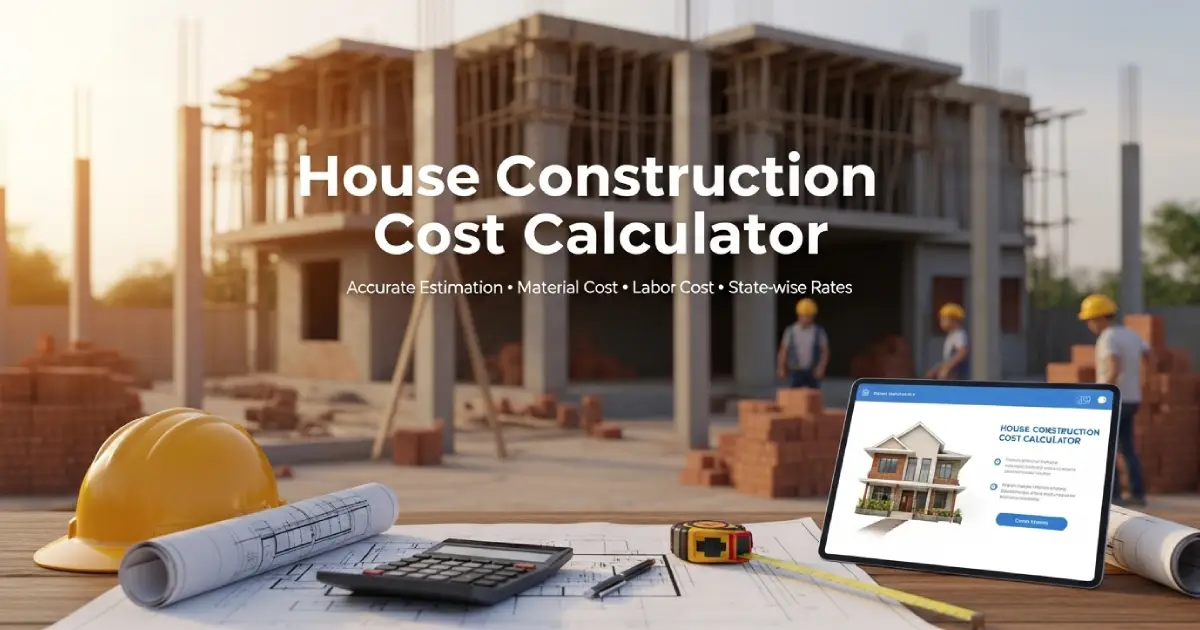
Building a home is likely the single biggest financial investment you will make in your lifetime. It is not just a structure of bricks and beam; it is an emotion, a legacy, and a shelter for generations to come. But let's face the hard truth: without a rock-solid budget, this dream can quickly turn into a financial nightmare. Market fluctuations, unorganized labor sectors, and hidden costs can inflate your budget by 20-30% before you even realize it. That is precisely why we built the House Construction Cost Calculator.
Whether you are a first-time home builder in Bangalore, a seasoned investor in Mumbai, or planning a retirement villa in Dehradun, clarity is power. This comprehensive guide—spanning over market trends, material breakdowns, and expert secrets—will empower you to estimate your construction costs with the precision of a civil engineer. No more guesswork. No more "approximate estimates" from contractors. Let's dive deep into the real numbers of building a house in India in 2026.
Our building construction cost calculator is designed to take these complexities into account. By using a home construction cost calculator that is tailored to the Indian market, you can ensure that your financial planning is both realistic and robust.
Why This Calculator is Different
Most online tools give you a generic "₹1500 per sq ft" number. That is dangerous. A house in Kerala (laterite stone) captures costs differently than a house in Punjab (burnt brick). Our House Construction Cost Calculator uses a dynamic algorithm backed by real-time data from 50+ cities, updating monthly to reflect the latest prices of Steel (Fe 550), Cement (OPC/PPC), and local labor unions.
Chapter 1: The Blueprint of Your Budget
Before we talk about money, we need to talk about structure. The cost of a house is not a single bill; it's a mountain of thousands of small invoices. To manage it, you must break it down. In professional construction management, we divide expenses into two major buckets: Core Shell (Civil Work) and Finishing (Interiors & Services).
The 60:40 Rule
For a standard residential building in India, the golden rule of thumb for 2026 is:
- 60-65% goes into Materials (Cement, Steel, Sand, Bricks, Tiles, Paint, Wood).
- 35-40% goes into Labor (Masons, Helpers, Bar-benders, Carpenters, Electricians).
If your contractor quotes a "Material + Labor" contract, ensure this ratio holds up. If the labor component exceeds 45%, you might be overpaying for services. Conversely, if material cost drops below 55%, the contractor might be compromising on quality (e.g., using low-grade steel or diluted cement mix).
Chapter 2: Detailed Cost Breakdown (Where Does Every Rupee Go?)
Let's take a hypothetical 1,000 sq ft plot. You are building a Ground Floor apartment. Estimated Total Cost: ₹18,00,000 (Class B Quality). Here is exactly how that money gets spent:
| Construction Stage | % of Budget | Est. Cost (1000 sq ft) | What It Covers |
|---|---|---|---|
| Excavation & Footing | 3-5% | ₹72,000 | Earthwork, PCC, Footing mesh, Column starters. Critical for structural stability. |
| Superstructure (RCC) | 15-18% | ₹3,00,000 | Columns, Beams, Roof Slab, Staircase. Major steel (TMT bar) consumption happens here. |
| Masonry Work | 10-12% | ₹2,00,000 | External (9-inch) and Internal (4-inch) walls. Bricks/Blocks + Cement Mortar. |
| Roofing & Plastering | 8-10% | ₹1,60,000 | Waterproofing, Internal smooth plaster, External rough plaster. |
| Flooring & Tiling | 6-8% | ₹1,40,000 | Living room, Bedrooms, Bathroom wall tiles, Kitchen granite slab. |
| Doors & Windows | 8-10% | ₹1,60,000 | Main Door (Teak), Internal Doors (Flush/Membrane), Window frames (UPVC/Wood). |
| Electrical & Plumbing | 8-10% | ₹1,60,000 | Conduit piping, Wires, Switches, PVC/CPVC pipes, Sanitaryware, Water tank. |
| Painting & Finishing | 5-7% | ₹1,10,000 | Putty, Primer, 2 coats of Paint (Interior/Exterior). |
| Miscellaneous | 3-5% | ₹90,000 | Gate, Parapet wall, Cleanup, Temporary electricity used. |
Accuracy of the Building House Construction Cost Estimate Calculator
When using a building house construction cost estimate calculator, it is essential to understand that the approximate construction cost can vary based on several site-specific factors. For example, a residential construction cost per sq ft calculator might provide a baseline, but local soil conditions or logistical challenges in hilly terrains can shift the final numbers by 10-15%.
Chapter 3: Quality Classes - The "Good, Better, Best" of Construction
One of the features of our House Construction Cost Calculator is the ability to select "Quality". But what does "Premium" really mean compared to "Standard"? It's not just about the brand; it's about the material specifications.
Ideal for: Rental properties, Farmhouses, Budget homes.
- Cement: Local / Mini-plant brands.
- Steel: Fe 500 (Local re-rolled brands).
- Bricks: Local 3rd class bricks or Cement blocks.
- Flooring: Ceramic tiles (₹35-45/sq ft).
- Doors: Readymade flush doors with paint finish.
- Electrical: Local wires, piano switches.
Ideal for: Self-use family homes, Apartments.
- Cement: Ultratech / ACC / Ambuja (PPC).
- Steel: Primary Brands (Tata Tiscon / JSW / SAIL Fe 550).
- Bricks: Red Clay Wire-cut bricks or AAC Blocks.
- Flooring: Vitrified Tiles (₹60-80/sq ft).
- Doors: Teak wood Main door, others flush with laminate.
- Electrical: Finolex/Polycab wires, Anchor switches.
Ideal for: Luxury Villas, High-end Floors.
- Cement: Premium Grade (Coromandel / Ultratech Super).
- Steel: Tata Tiscon SD (Super Ductile).
- Flooring: Indian Marble / Granite (₹120+/sq ft).
- Plumbing: Grohe / Kohler / Jaguar Artize.
- Doors: Burma Teak frames and shutters.
- Finishing: False ceilings (Gypsum), Melamine polish.
Ideal for: Palatial homes, Mansions.
- Flooring: Imported Italian Marble (Statuario/Bottochino).
- Walls: Full wall cladding, Onyx detailing.
- Automation: Central HVAC, Smart Home (lighting/curtains).
- Windows: Double Glazed (Soundproof) Aluminum/UPVC.
- Extras: Home Theater, Steam/Sauna, Swimming Pool.
Chapter 4: The Construction Timeline (A Step-by-Step Flow)
Many people ask us, "How long will it take?" The answer depends on funds and seasons, but for a 1500 sq ft house, expect 6 to 9 months. Here is the realistic roadmap:
Month 1: The Foundation
Site clearing, excavation, PCC bed, Footing casting, and Plinth Beam. This is messy work. ProTip: Ensure proper termite treatment (Anti-termite pipelining) is done at the plinth level. You cannot do this later.
Month 2: The Skeleton
Column raising and Slab centering (shuttering). The roof slab requires 21 days of "Curing" (watering). Do not let the contractor dismantle the shuttering early; gravity is unforgiving.
Month 3: Walls & Concealed Lines
Brickwork finishes quickly. Once walls are up, electricians and plumbers must cut grooves (jhirri) for concealed pipes. If you forget a point now, you will have visible ugly wires later.
Month 4-5: Plastering & Flooring
Internal and external plastering. Once plaster dries, waterproofing (bathroom/terrace) begins. Then, tiling starts. Caution: Cover your floor with POP sheets immediately to protect it from paint droppings.
Month 6-8: Finishing touches
Putty, Painting, Door/Window fixing, Electrical switches, Sanitary fittings, and Cabinetry. This stage feels slow because it requires precision.
Chapter 5: Hidden Costs That Will Shock You
The biggest mistake first-time home builders make is trusting the "per sq ft" quote blindly. Your contractor quotes for the "Built-up Area" (the house itself). He does NOT quote for the things around it. Be prepared for these extra expenses:
- Compound Wall: Charged per running foot. A 5-foot high wall for a 30x40 site can cost ₹1.5 - ₹2 Lakhs.
- Gate & Ramp: A heavy MS Gate (300kg) alone costs ₹25,000 - ₹40,000.
- Borewell: Driling + Casing + Pump. In Bangalore/Hyderabad, this can easily hit ₹1.5 Lakhs.
- Municipal Approvals: Plan sanction fees, BESCOM/TNEB temporary meter deposits, water connection charges. Budget ₹50,000 to ₹2 Lakhs depending on the city.
- Elevation (Façade): The "per sq ft" rate covers basic plaster. If you want Stone cladding, HPL sheets, or CNC jalis, that is extra.
Chapter 6: Regional Cost Trends (Where do you live?)
India is a continent masquerading as a country. Construction dynamics change every 500 kilometers.
Bengaluru & South Karnataka
The bedrock is hard (requires blasting). River sand is banned/expensive, so M-Sand (Crushed stone) is the gold standard. Solid Concrete Blocks are used instead of Red Bricks. Labor is expensive (₹800-1000/day for skilled).
Delhi NCR & Punjab
Red Clay Bricks are king here. Termite infestation is common, making treatment mandatory. Extreme heat and cold require better insulation on terraces (Brick bat coba). Labor is migratory and relatively cheaper.
Mumbai & Pune (MH)
Space is tight. Logistics (transporting material) costs a bomb. Black Cotton Soil in many parts of Maharashtra requires "Pile Foundations" or "Raft Foundations," which consume 30% more steel and concrete than usual.
Kerala & Coastal Belts
Highest labor wages in India (hard to find help below ₹1100/day). Laterite stone (Vettukallu) is widely used for walls. Heavy monsoons necessitate Sloped Roofs with tiles, adding to structural costs.
Chapter 7: 10 Commandments to Save Money (The Engineer's Way)
You can save ₹2-3 Lakhs on a standard house just by being smart. You do not need to cheat on quality; you need to optimize.
- Design Efficiency: A square house has the least wall area for the most floor area. Every corner you add increases material usage. Keep the plan Simple.
- Bathroom Clustering: Place bathrooms next to each other or one above the other. This reduces execution of piping length and reduces leakage risks.
- Window sizing: Standardize window sizes (e.g., 4x5 ft). Custom sizes lead to huge wastage in glass and granite framing.
- Alternate Materials: Use PPC Cement for plaster/brickwork (it cures better and is cheaper) and OPC 53 only for Concrete. Use AAC blocks to reduce structural load (saving steel).
- Off-Season Buying: Buy finishing materials (Lights, Fans, Sanitaryware) during sale seasons or financial year-ends (March), even if you need them months later.
- Kitchen Cabinets: Don’t build concrete shelves for kitchens. Modular kitchens are easier to install and offer more storage efficiency.
- The Staircase Trap: Elaborate floating staircases look great but cost 3x of a normal folded-plate staircase. Stick to functional designs.
- Avoid "Running" Feet: When paying contractors, try to work on "Sq ft" basis for items like Granite. "Running feet" calculations often hide the actual area cost.
- Electrical Points: Plan furniture layout BEFORE electrical work. Moving a switchboard by 1 foot later costs ₹2000 in labor + damage.
- Supervision: If you can visit the site daily, go for a "Labor Contract" (you buy materials). You save the 15% margin the contractor usually charges on material handling.
The Importance of a Home Material Cost Calculator
A major part of any budget is the procurement of raw materials. A reliable home material cost calculator helps you track the price of every bag of cement and every ton of steel. By using a building materials cost calculator, you can stay ahead of market trends and avoid surprises during the procurement phase. Additionally, a home make calculator allows you to iterate on different design choices to see how they impact your overall expenditure.
Language Support Available
This construction cost calculator fully supports Hindi and English languages for your convenience.
Who can use this calculator?
Our construction cost calculator is a versatile tool designed for everyone involved in the house-building process:
Homeowners
Plan your dream home budget with confidence.Architects
Provide quick, reliable estimates to your clients.Engineers
Verify material quantities and labor rates.Contractors
Streamline your bidding and cost assessment.Frequently Asked Questions (FAQ)
- Cement: 400 - 450 Bags
- Steel: 3.5 - 4 Metric Tons
- Sand: 1800 - 2000 Cubic Feet (cft)
- Aggregates: 1200 - 1400 Cubic Feet
- Bricks: 18,000 - 20,000 pcs (Red bricks)
Ready to Start?
Don't let numbers scare you. With the right planning, your dream home is just a calculation away.
Use the House Construction Cost Calculator at the top of this page to generate your personalized estimate report now.