

The Foundation of Your Project: Construction Planning Guide and Site Prep
Before you buy a single bag of cement or lay down the first brick, this comprehensive building construction guide outlines that the ground beneath your feet holds the key to your home’s structural lifespan. Our house construction guides emphasize the critical step of soil testing, which individual home builders in India often skip as an unnecessary expense. However, a professional construction planning guide always begins with understanding the bearing capacity of your plot's soil. This dictates the design of your foundation—whether you need a simple spread footing, a pile foundation, or a raft slab. If you build blindly on black cotton soil without proper reinforcement, you risk structural cracks and settlement issues down the line. Spending a few thousand rupees on a professional soil test will save you lakhs in future repair bills.
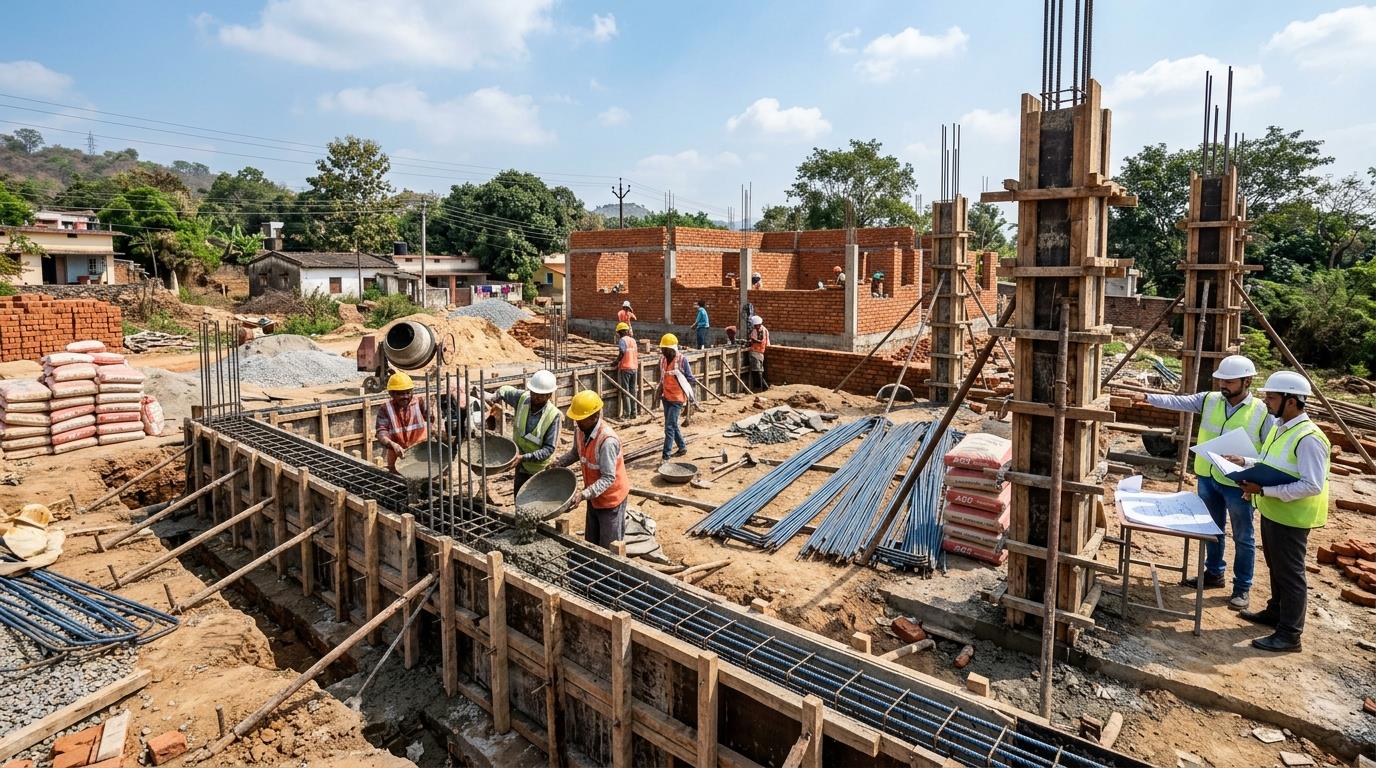
Once the soil profile is clear, site clearance begins. This involves removing topsoil, organic debris, and large roots that could decay over time and cause hollow spaces beneath your flooring. The layout alignment must then be marked precisely according to your approved architectural plan. Ensuring right angles (or the local term "duniya") at the corners during this layout stage prevents asymmetrical rooms and structural misalignment that become impossible to fix once civil works are completed.
Building Material Estimation and Controlling Construction Cost Guide
The cost of building materials accounts for roughly 60% to 70% of your total house construction cost per square foot in India. Navigating this marketplace requires direct participation rather than leaving all procurement to a contractor. Sourcing materials like cement, TMT steel bars, river sand, and bricks directly from wholesale dealers can trim your budget by 10% to 15%. When selecting cement, opt for OPC (Ordinary Portland Cement) for columns and slabs where rapid setting is needed, and PPC (Portland Pozzolana Cement) for plastering and brickwork due to its superior resistance to dampness and heat.
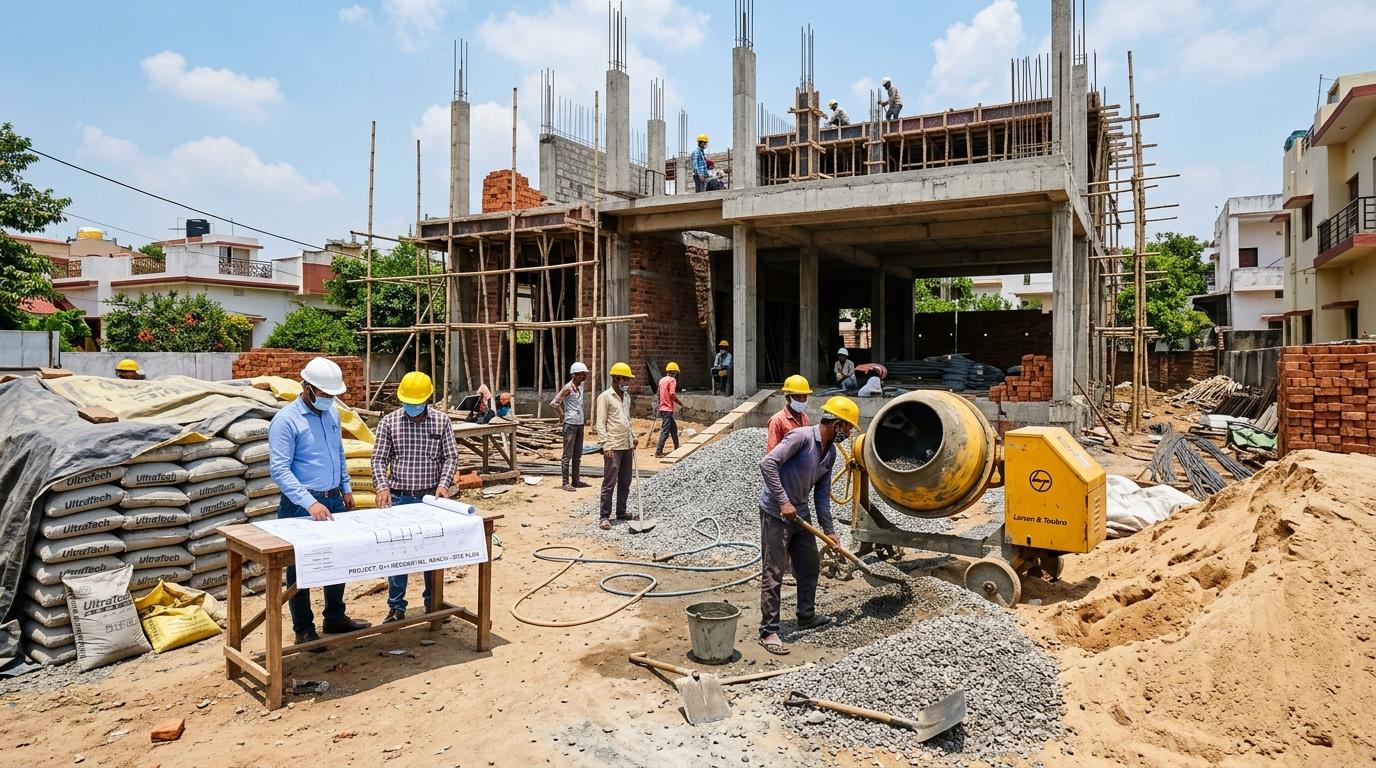
Accurate building material estimation is vital for keeping your finances in check. By following a proven construction cost guide, home builders can trim their budgets by 10% to 15% through direct wholesale procurement. TMT steel bars (Thermo-Mechanically Treated) are the backbone of your RCC framework. Always look for Fe 500D or Fe 550D grades from reputable manufacturers, checking that the bars carry genuine ISI marks to ensure proper elongation and earthquake resistance. To further control costs, establish a secure on-site storage area. Water ruins cement bags, while exposed steel rusts quickly. Simple steps, like stacking cement bags on wooden pallets in a dry room and covering steel bars with waterproof tarpaulins, protect your investment from environmental damage.
In addition to storage, close monitoring of daily operations prevents waste. Ensure masons adhere to correct mixing ratios (such as M20 grade concrete consisting of 1 part cement, 1.5 parts sand, and 3 parts aggregate). Improper mixing weakens the structure and wastes materials. Keep track of daily consumption to spot discrepancies early and prevent theft or careless handling of premium finishes.
Designing for the Future: Layout Planning and Home Construction Resources
A beautiful home is only as good as its functionality. Utilizing premium home construction resources helps you design a floor plan that prioritizes natural ventilation, thermal comfort, and optimal room sizing. These practical home construction tips ensure your home is built to last. In tropical Indian climates, placing larger windows on the north and east walls maximizes morning light while avoiding the harsh afternoon heat of west-facing walls. Plan your plumbing shafts carefully; clustering kitchens and bathrooms together reduces the length of pipe runs, lowering material costs and minimizing the risk of future concealed leaks.
Simultaneously, you must navigate the legal landscape of municipal approvals. Attempting to build without a formally approved building plan (or naksha) from your local municipal corporation or town planning authority can lead to hefty penalties, demolition notices, or difficulties in securing home loans and utility connections. Ensure your plan complies with regional setbacks (open space left around the building) and FAR (Floor Area Ratio) regulations. Having clear, legally sound paperwork ensures a peaceful construction journey and protects the resale value of your property.
Finally, hire a qualified structural engineer to validate the design. While architects focus on aesthetics and room layout, a structural engineer calculates the exact column sizes, beam depths, and steel reinforcements required to support the dead and live loads of the building. This prevents under-designing (which causes safety hazards) and over-designing (which inflates material costs unnecessarily).